
HANGZHOU, ZHEJIANG, CHINA, November 24, 2026 /EINPresswire.com/ — # Top 10 Conveyor Belt Accessories Every Buyer Should Know
Conveyor belt accessories may seem like minor components compared with the main belt and drive system, but they play an important role in maintaining stable material handling, controlling dust, and reducing maintenance costs. Worn skirt seals can cause material spillage, while incorrectly aligned belt scrapers may push carryback onto the return belt, increasing cleanup work and equipment wear.
When selecting conveyor accessories, buyers should consider material characteristics, transfer-point conditions, and maintenance requirements. Factors such as belt width, operating speed, material size, moisture content, and temperature all influence component performance. A cleaner suitable for dry materials, for example, may struggle with wet and sticky loads.
A practical purchasing evaluation should identify the actual operating problem, confirm compatibility with existing equipment, and consider installation, replacement, and long-term maintenance costs.
## Core Functions of Conveyor Belt Accessories
Conveyor accessories help control material spillage, belt alignment, impact forces, and routine maintenance. Impact beds cushion falling materials at loading points, skirt systems contain conveyed products, and idlers support the moving belt.
Misaligned idlers can cause belt deviation, edge damage, and material loss. Belt cleaners remove carryback before it accumulates beneath the return run, although excessive scraper pressure may accelerate blade and belt wear.
Accessories also influence energy consumption and workplace safety. The U.S. Department of Energy’s 2014 United States Industrial Electric Motor Systems Market Opportunities Assessment reports that motor-driven systems account for approximately 68% of manufacturing electricity consumption. Although this figure is not conveyor-specific, it highlights the importance of reducing unnecessary mechanical resistance.
CEMA’s *Belt Conveyors for Bulk Materials* provides guidance on conveyor design and component selection, while OSHA guidance emphasizes guarding moving parts and providing accessible emergency stops. Regular inspections remain essential because accessories cannot eliminate every operational problem.
## Belt Support and Tracking Components
Idlers support the conveyor belt, while troughing idlers shape the carrying side and return rollers limit sag. Tracking devices, including training idlers and adjustable pulleys, help guide the belt along its intended path.
Even slight frame misalignment can cause belt deviation, friction, and edge damage. Buyers should check roller diameter, spacing, bearing protection, and adjustment accessibility according to belt speed, load, and operating environment.
Dust, moisture, and sticky carryback can shorten roller service life. Tracking devices cannot compensate for poor structural alignment, so buyers should inspect the entire conveyor frame and specify suitable guards and safe maintenance access.
For a Wide Belt Sander Conveyor Belt, the support surface should also remain flat under sanding pressure. Testing with actual workpiece loads helps verify performance.
## Belt Cleaning and Carryback Control Devices
Carryback refers to material remaining on the belt after discharge. It can accumulate beneath pulleys, coat rollers, and create dusty cleanup areas.
Primary belt cleaners are installed near the head pulley to remove loose material, while secondary cleaners remove finer residue. Their contact pressure must be adjusted correctly: insufficient pressure leaves material behind, while excessive pressure accelerates wear.
V-plows and diagonal plows protect the return belt by moving trapped debris away before it reaches the tail pulley. Buyers should select cleaning devices according to belt width, speed, splice configuration, material characteristics, and moisture levels.
Wet fines may smear across the belt rather than fall away easily, meaning a scraper alone may not provide sufficient cleaning. Regular inspections and records of blade replacement, material buildup, and cleanup frequency help evaluate cleaning performance.
## Skirting, Sealing, and Dust-Control Accessories
Skirting systems help contain materials at conveyor transfer points and reduce dust escaping from chutes. Correct positioning and contact pressure are more important than simply selecting thicker rubber. Excessive pressure can damage the belt cover, while insufficient pressure allows fine materials to escape.
Adjustable clamps help maintain consistent skirt positioning as materials wear. Sealing strips, dust curtains, and flexible baffles further reduce material leakage and airborne particles. Dust extraction systems generally work best when positioned close to the actual dust release point.
Operators should inspect skirt areas, nearby structures, and chute surfaces for accumulated dust, uneven wear, and material buildup. Particle size, moisture, belt speed, and chute geometry should all be considered when choosing sealing and dust-control solutions.
### Ten Common Skirting, Sealing, and Dust-Control Accessories
**1. Skirting Rubber:** Skirting rubber forms a flexible seal along loading-zone chute sides to reduce material spillage. It is commonly made from rubber or polyurethane, with hardness and thickness selected according to application requirements. Buyers should consider belt width, material abrasiveness, temperature, and contact pressure. Regular inspections should identify wear, hardening, and gaps.
**2. Skirting Clamp and Support System:** This system holds skirt materials in position and allows adjustment or replacement without major chute modifications. Common designs include clamping bars, retaining channels, fasteners, and adjustable brackets. Buyers should confirm structural compatibility and safe maintenance access.
**3. Primary Belt Cleaner:** Installed near the head pulley, a primary cleaner removes carryback and reduces material accumulation. Replaceable polyurethane blades are commonly used. Selection should consider belt width, speed, splice type, and conveyed material. Maintenance includes checking blade wear, tension, and belt condition.
**4. Secondary Belt Cleaner:** Secondary cleaners remove fine residue left by primary scrapers. They may use segmented or continuous polyurethane blades. Buyers should assess installation space, belt path, and compatibility with the primary cleaning system. Regular inspections help maintain suitable contact pressure.
**5. Impact Bed or Impact Cradle:** Impact beds support the belt beneath loading points and absorb forces from falling materials. They commonly feature support frames with low-friction surfaces and energy-absorbing impact bars. Important considerations include drop height, lump size, loading rate, and structural capacity.
**6. Dust Curtains:** Dust curtains help contain airborne particles inside transfer chutes and loading enclosures. They are commonly manufactured from flexible rubber or fabric. Buyers should consider material compatibility, operating conditions, and access requirements. Torn or displaced strips should be replaced.
**7. Chute and Transfer-Point Seals:** These seals close gaps around transfer-point openings to prevent material leakage and reduce dust escape. Common designs include flexible strips, rubber profiles, and enclosure seals. Buyers should evaluate opening dimensions, temperature, abrasion, and maintenance accessibility.
**8. Dust-Suppression Spray System:** Spray systems use water or suitable mist to reduce airborne dust. Typical components include nozzles, piping, valves, filters, and controls. Buyers should check water availability, nozzle positioning, drainage, and whether added moisture is acceptable for the material. Regular maintenance should include nozzle and filter cleaning.
**9. Transfer-Chute Liner:** Chute liners protect internal surfaces against abrasion and help manage material flow. Common materials include wear-resistant steel, rubber, ceramic, and composites. Selection should consider impact zones, chute geometry, attachment methods, and replacement access.
**10. Belt-Tracking Idlers or Training Rollers:** These components help guide belts toward their intended paths through pivoting or self-aligning roller assemblies. Before purchasing, buyers should investigate structural alignment, pulley positioning, and loading conditions. Regular inspections should check roller rotation, positioning, and material buildup.
## Loading and Transfer-Point Protection
Loading-zone protection starts before materials reach the conveyor belt. Properly sized impact beds support the belt beneath chutes, while skirtboards and adjustable sealing strips contain material along the sides.
Chutes should be centered and designed to direct materials in line with belt movement. Misalignment can cause dust emissions, uneven loading, and material accumulation.
CEMA’s *Belt Conveyors for Bulk Materials* provides engineering guidance on material flow, impact, and transfer-point design. Maintenance teams should inspect chute liners, skirt seals, and impact supports for wear or damage.
Dust accumulation near chutes, polished skirt surfaces, and uneven material distribution can indicate underlying problems. Even new accessories cannot prevent spillage if materials are consistently directed away from the belt center.
## Safety and Belt-Condition Monitoring Devices
Safety devices protect workers and reduce equipment damage. Pull-cord switches allow workers to stop moving belts from accessible positions along the conveyor. Operators should regularly check cord accessibility, tension, and condition.
Belt misalignment switches detect deviations toward conveyor frames or rollers. Depending on the control system, they may trigger alarms or stop the conveyor. Correct positioning is important to avoid unnecessary shutdowns or missed warnings. Safety switches do not replace mechanical guards or safe maintenance procedures.
Condition-monitoring devices provide additional information about equipment performance. Speed sensors detect belt slipping, temperature sensors identify abnormal bearing heat, and vibration monitoring can reveal changes in rollers, bearings, and drive components.
Maintenance teams should compare sensor readings with reliable baseline measurements and record alarms, repairs, and operating conditions. Inspection intervals and alarm thresholds should follow equipment manuals and site-specific risk assessments.
## How to Choose Accessories for a Conveyor System
Selecting suitable accessories begins with understanding the conveyed material. Dusty, wet, abrasive, or sticky materials require different cleaning, sealing, and impact-protection solutions.
Buyers should confirm belt width, operating speed, tension, loading-point position, and available installation space before ordering. Heavy materials falling from considerable heights may require reinforced impact beds, while fine powders may need tighter sealing and additional dust-control equipment.
Operating environments also matter. Outdoor installations may require corrosion-resistant materials, while systems exposed to high temperatures or frequent washdowns need suitable components and drainage arrangements.
Maintenance accessibility should be another purchasing priority. Buyers should understand how quickly worn components can be inspected, removed, and replaced. A component that performs well but requires extended downtime for servicing may increase total operating costs.
Before finalizing a purchase, operators should observe the conveyor under both empty and loaded conditions, inspect spillage after operating shifts, and listen for unusual rubbing or vibration. A practical combination of properly selected cleaners, skirt seals, and support components can often solve operating problems without unnecessary upgrades.
## Common Conveyor Belt Accessories and Sizing Considerations
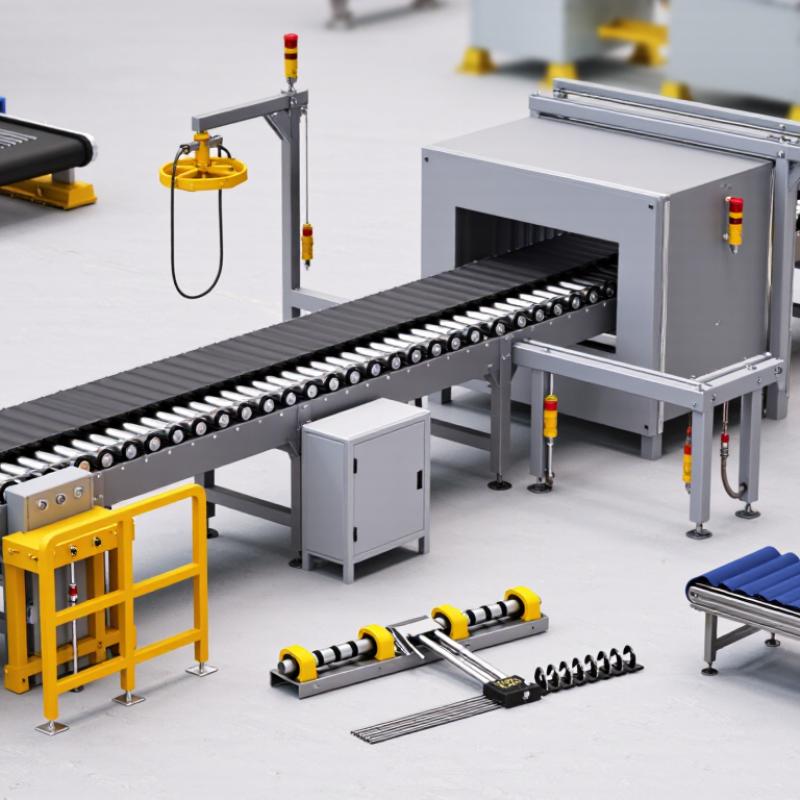
Common conveyor accessories include belt cleaners, tracking systems, impact beds, skirtboards, idlers, pulleys, take-up units, belt fasteners, safety guards, and speed sensors.
Accessory dimensions must match the belt width and conveyor layout. Buyers should confirm actual belt measurements, applicable standards, mounting arrangements, roller dimensions, and installation clearances before ordering.
## Air Slide Conveyors for Powdered Materials: A 7–1,200 TPH Guide
Air slide conveyors provide a practical solution for transporting dry powdered materials in cement production and mineral processing facilities. This conveyor series covers capacities ranging from 7 to 1,200 TPH, calculated based on cement, and is designed for cement, mineral powder, and fly ash.
The system features a 6 mm synthetic-fiber breathable layer woven as a single unit to support durability and airflow. Slotting widths range from 120 mm to 1,000 mm, covering 12 standard body widths: 120, 160, 200, 250, 300, 315, 350, 400, 500, 630, 800, and 1,000 mm. Customized widths are also available.
The slotting angle ranges from 4° to 12°, allowing installation layouts to accommodate different site conditions and powder characteristics. Actual conveying performance depends on material properties and operating requirements.
## Conclusion
Conveyor belt accessories help maintain stable, efficient, and safe material-handling operations. Support and tracking components maintain belt alignment, cleaning devices reduce carryback, and skirting and sealing systems help control spillage and dust emissions.
Loading-point protection reduces impact damage, while safety and monitoring devices help operators identify potential problems early. Selecting suitable accessories requires evaluating material characteristics, belt speed, transfer-point design, equipment compatibility, and maintenance requirements.
By considering how these components work together, buyers can develop a practical conveyor configuration that improves operational reliability, protects equipment, and simplifies routine maintenance.
Hangzhou Aotuo Mechanical and Electrical Co., Ltd.
Hangzhou Aotuo Mechanical and Electrical Co., Ltd.
+ +86-400-826-9568
info@hzaotuo.com
Legal Disclaimer:
EIN Presswire provides this news content “as is” without warranty of any kind. We do not accept any responsibility or liability
for the accuracy, content, images, videos, licenses, completeness, legality, or reliability of the information contained in this
article. If you have any complaints or copyright issues related to this article, kindly contact the author above.

Media gallery