
Shenzhen, Guangdong, China-September 16, 2026
Huawei 5510 V5 expansionshould begin with compatibility analysis rather than simply calculating how many additional terabytes are required. Existing OceanStor 5510 V5 systems may need more capacity because business data has grown, while other environments may require a faiLED drive, controller-related component, or expansion hardware to be replaced. Although these requirements may look similar from a hardware perspective, the technical checks behind them are different.
For an existing Huawei 5510 V5 storage system, a drive with the same nominal capacity is not automatically a compatible replacement. A request such as “Huawei 5510 V5 6TB drive” provides only part of the information needed to determine whether a component is suitable. Drive type, interface, enclosure configuration, firmware, controller environment, and the existing storage pool can all affect compatibility.
This is why effective Huawei 5510 V5 expansion planning starts with the current system configuration, not with the capacity printed on a new drive.
Huawei 5510 V5 Expansion Starts With the Existing Configuration
Before adding storage capacity, the first step should be understanding what is already installed.
Two Huawei 5510 V5 systems may use the same storage model but have different disk types, enclosure layouts, controller configurations, firmware versions, host connections, and storage pools. An expansion component that is suitable for one environment may therefore not be appropriate for another.
A useful Huawei 5510 V5 configuration check should normally collect:
- Current storage model and controller configuration;
- Existing HDD or SSD model and part number;
- Drive capacity and interface;
- Expansion enclosure information;
- Software and firmware versions;
- Current storage pool or RAID layout;
- Current usable and free capacity;
- Required additional usable capacity;
- Whether the requirement is expansion or replacement.
This information helps separate a genuine compatibility assessment from a simple capacity match. It also reduces the risk of selecting a drive or component that appears correct based on one specification but does not fit the existing environment.
Huawei 5510 V5 Drive Replacement and Storage Expansion Are Different Tasks
Replacement and expansion are often discussed together, but they solve different problems.
A Huawei 5510 V5 drive replacement usually begins with an existing component that has failed, is showing abnormal status, or needs to be replaced as part of maintenance. In this case, the main priority is compatibility with the current environment and successful integration with the existing storage pool.
Expansion has a different objective. A Huawei 5510 V5 expansion project is intended to increase available storage resources, which means the planning process should consider not only individual drive compatibility but also how the additional capacity will be incorporated into the overall storage architecture.
Replacement planning normally focuses more heavily on:
- Existing drive model and specifications;
- Compatibility with the current enclosure;
- Firmware and system support;
- Existing protection configuration;
- Rebuild and recovery requirements.
Expansion planning needs to consider a wider set of questions, including:
- How much additional usable capacity is actually required;
- Whether the existing enclosure has suitable available drive positions;
- Whether an additional expansion enclosure is needed;
- How new capacity will be added to pools or disk groups;
- Whether workload growth has changed the performance requirement.
Treating these two tasks as identical can result in an incomplete configuration decision.
Raw Capacity Is Not the Same as Usable Capacity
Another common mistake in enterprise storage expansion is calculating capacity only from the number printed on the drives.
For example, adding several 6TB drives produces a certain amount of raw disk capacity, but this does not mean the same amount will become available to applications. Data protection, parity, spare capacity, storage-pool configuration, metadata, and other system requirements can reduce final usable capacity.
Therefore, Huawei 5510 V5 expansion planning should be based on required usable capacity rather than raw capacity alone.
If an application requires a specific amount of additional usable space, the planning process should work backward from that target. This approach is more useful than simply asking how many drives can physically be installed.
It also prevents a situation where an expansion appears large enough on paper but provides less practical application capacity than expected after the storage system applies its protection and management structure.
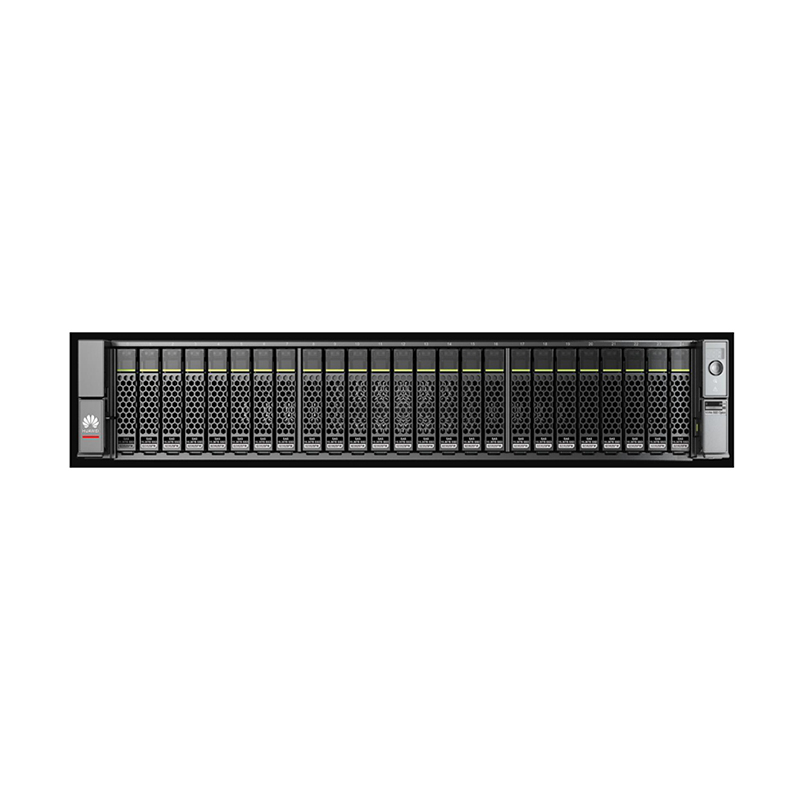
Controller, Enclosure, and Firmware Information Matter During Compatibility Checks
Enterprise storage components do not operate independently. A disk is installed into an enclosure, controlled by the storage system, recognized through firmware, and incorporated into a managed pool.
This is why compatibility assessment should examine the surrounding hardware and software environment rather than evaluating the drive by itself.
For an existing Huawei 5510 V5 storage configuration, controller information can help identify the current system structure, while enclosure information determines where drives are physically installed and what configurations are already present. Firmware and software versions are also important because supported hardware combinations may depend on the system environment.
When requesting a Huawei 5510 V5 replacement drive or expansion component, providing photographs of the current drive label, part number, enclosure information, controller details, and software version can make component identification significantly more accurate than providing only the storage model.
The more mature an enterprise storage environment becomes, the less reliable it is to select components based on a single specification.
Workload Growth Should Influence Huawei 5510 V5 Expansion Planning
Capacity growth is often the reason an expansion project begins, but workload growth should also be reviewed.
An organization may have originally deployed the Huawei 5510 V5 for a limited number of applications, then gradually added virtual machines, databases, shared files, backup tasks, or other business systems. Even if the immediate problem appears to be insufficient capacity, the workload placed on the storage system may also have changed significantly.
Before expanding, it is useful to review whether:
- More hosts now access the array;
- I/O demand has increased;
- Backup windows have become longer;
- Databases or virtual machines have expanded;
- Business applications now require more consistent response;
- Data protection requirements have changed.
If workloads have changed significantly, simply adding capacity may not address the entire problem. The expansion should be evaluated as part of the existing storage architecture rather than as an isolated disk installation.
This is particularly important when an older storage environment has been expanded several times over its operating life. The configuration that was appropriate at initial deployment may no longer match current business behavior.
When Is Replacing One Drive Enough?
Not every storage issue requires a major expansion or redesign. If one drive fails and the rest of the Huawei 5510 V5 environment remains healthy, a correctly matched replacement may be all that is required.
However, a single-drive request can sometimes reveal a broader issue. For example, the system may already be close to capacity limits, several drives may be of similar age, expansion slots may be limited, or the platform may be approaching a stage where compatible components require more careful planning.
At that point, it is useful to ask whether the immediate replacement should remain a standalone maintenance task or become part of a wider storage review.
A broader assessment becomes more valuable when:
- Capacity is already close to the planned limit;
- Multiple components require replacement;
- Expansion is expected soon;
- Compatible hardware is becoming harder to source;
- The application environment has changed substantially;
- Migration to a newer storage platform is already being considered.
The objective is not to turn every component replacement into a large infrastructure project. It is to avoid repeatedly solving individual hardware problems while ignoring a storage environment that is already reaching the limits of its original design.
HSBY Huawei 5510 V5 Compatible Drives and Expansion Components
Hua Sheng Bo Ye (Shenzhen) Technology Co., Ltd. provides Huawei 5510 V5 storage, enterprise drives, storage components, servers, networking hardware, and related IT infrastructure products.
For companies looking for a Huawei 5510 V5 supplier, compatible HDD or SSD options, replacement components, or storage expansion hardware, providing the existing configuration can improve matching accuracy. Drive part numbers, controller details, enclosure information, firmware version, required capacity, and whether the component is intended for replacement or expansion are particularly useful.
For an existing enterprise storage system, a correct configuration match is generally more important than selecting a component simply because its capacity or interface appears similar.
Conclusion
Huawei 5510 V5 expansion should be treated as a system-level compatibility task rather than a simple calculation of additional disk capacity. The existing controller, enclosure, drive configuration, firmware, storage pool, workload, and protection structure all influence how new capacity or replacement components should be planned.
The most important distinction is straightforward: the same capacity does not automatically mean the same compatibility. A Huawei 5510 V5 6TB drive requirement, for example, should be checked against the complete existing environment before a replacement or expansion decision is made.
For existing Huawei 5510 V5 systems, collecting accurate configuration information before expansion can reduce compatibility problems, improve capacity planning, and make future maintenance or migration easier to manage.
FAQ1. Can any 6TB drive be used in Huawei 5510 V5?
No. A Huawei 5510 V5 6TB drive should be checked for interface, drive type, enclosure, firmware, controller, and existing storage configuration rather than capacity alone.
2. What information is needed before Huawei 5510 V5 expansion?
Controller configuration, current drive model, enclosure, firmware, storage layout, required usable capacity, and workload information are useful for planning an expansion.
3. Is Huawei 5510 V5 drive replacement the same as expansion?
No. Replacement focuses primarily on restoring an existing component and maintaining compatibility, while expansion focuses on increasing storage resources and may require broader capacity and architecture planning.
4. Why is usable capacity lower than raw drive capacity?
Data protection, parity, spare capacity, metadata, and storage-pool configuration can reduce the amount of capacity available to applications.
About us
We are Committed to Provide You the Best IT Product & Solution, Our commitment is also evidenced by the large trust brands like Acer, Apple, Asus, Brother, Cisco, Cisco Meraki, Dahua, Dell Technologies, D-Link, Docu Sign, EfficientIP, Fortinet, Fujitsu, H3C, Hitachi Vantara, HP, HP Enterprise, Huawei, Inspur, Kaspersky, Lenovo, MSI, Netscout, NVIDIA, Oracle, PureStorage, Quantum, Razer, Rubrik, Ruijie, Samsung, Trend Micro, XFusion and Zoom who has been appointed us as their Authorized Distributor.
Media Contact
Company Name: Hua Sheng Bo Ye (Shenzhen) Technology Co., Ltd.
Contact Person: Media Relations
Email: Send Email
Country: China
Website: https://www.hsbytechnology.com/
Press Release Distributed by ABNewswire.com
To view the original version on ABNewswire visit: Huawei 5510 V5 Expansion: What Should Be Checked Before Adding Drives or Replacing Components?


