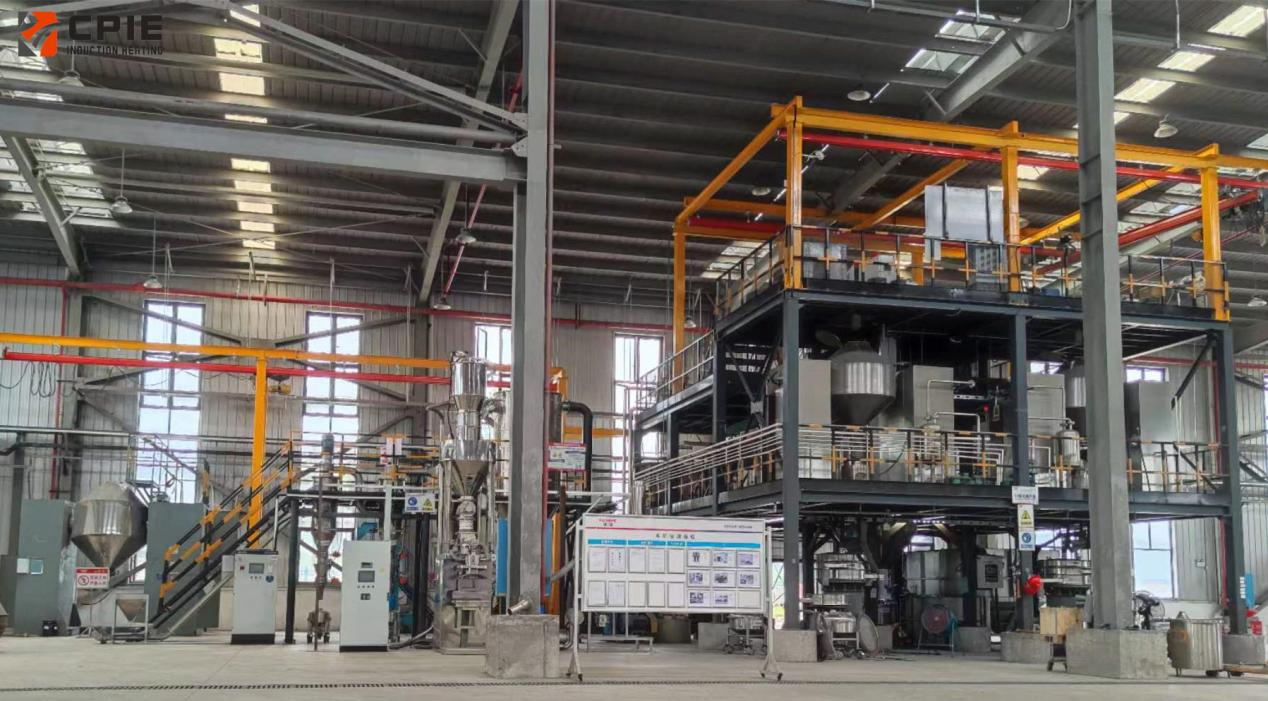
ZHUZHOU, HUNAN, CHINA, October 14, 2026 /EINPresswire.com/ — As engineering specifications for high‑stakes powder‑metallurgy and energy‑critical components keep advancing, implementing a strict full‑process manufacturing framework is critical to mitigating metallurgical risks. Delivering qualified metal powder for high‑end sectors requires systematic control covering raw‑material inspection, melting, atomization and final powder post‑processing. Premium powder‑metallurgy components demand uncompromising standards for powder purity, low oxygen content, particle‑size consistency, sphericity and batch‑to‑batch reproducibility. Different from ordinary commercial powder‑making lines, high‑grade powder production runs under inert‑shielded closed conditions to avoid impurity contamination; stable particle morphology and uniform microstructure serve as core engineering targets. Reliable metal powder feedstock drastically lowers internal defects of sintered or additively‑manufactured parts, improving component quality for critical industrial equipment. To satisfy these rigorous high‑end manufacturing requirements, modern production heavily adopts hybrid atomization technologies. The launch of CPIE China‑top combined water‑gas atomization powder‑making equipment marks a major technical breakthrough for mass‑producing high‑quality alloy and stainless‑steel powder without sacrificing key metallurgical performance.
I. Special Nature of High‑Grade Metal Powder and Core Procurement Logic
Procuring powder‑making hardware for high‑end industrial facilities differs substantially from conventional industrial equipment purchasing. Its procurement logic is built on full‑process traceability, zero‑defect tolerance, and strict compliance with international codes such as ASME.
Key technical bottlenecks for traditional powder‑making include poor sphericity from pure‑water atomization, high operating cost of full gas atomization, unstable oxygen content, broad particle‑size distribution and inconsistent quality between batches. Conventional single‑medium atomization may introduce hidden micro‑defects that are unacceptable for high‑end industrial applications.
To tackle these pain points, modern engineering applies two‑stage combined water‑gas atomization paired with closed inert‑gas protection. Inert gas pre‑fragments molten metal streams to moderate droplet cooling rate, then high‑pressure water jets perform secondary crushing to secure high fine‑powder yield. For plant owners and EPC contractors, equipment assessment shall cover melting temperature closed‑loop control, dual‑medium pressure synchronous adjustment, inert‑atmosphere sealing performance, continuous process data recording and proprietary patent support.
II. Step‑by‑Step Engineering Guide to Combined Water‑Gas Atomization Technology
Advanced combined water‑gas atomization bridges molten alloy ingots and qualified high‑grade metal powder feedstock. The whole manufacturing workflow can be divided into five distinct operational phases:
Step 1: Raw Material Preparation & Melt‑Stream Calibration
Before atomization starts, raw carbon steel, alloy steel or stainless‑steel ingots go through strict metallurgical composition inspection and impurity verification. Under inert shielding atmosphere, the induction melting furnace precisely adjusts molten‑metal temperature and pouring speed. Melt‑stream calibration guarantees stable laminar liquid flow toward the atomizing nozzle block.
Step 2: Dual‑Medium Coupled Two‑Stage Atomization
The proprietary combined atomization nozzle surrounds the steady molten‑metal stream. High‑pressure inert gas conducts primary fragmentation on liquid metal; synchronized high‑speed water jets complete secondary ultra‑fine crushing. Thermal sensors and pressure modules monitor gas‑water parameters in real‑time to balance powder fineness and sphericity and suppress excessive oxidation.
Step 3: Droplet Flight & Controlled Atmosphere Solidification
Fragmented metal droplets fly downward inside the sealed atomization tower and solidify under regulated cooling rates. Inert gas atmosphere restrains oxygen pick‑up. The synergistic effect of gas pre‑atomization and water crushing grants droplets sufficient time for surface‑tension‑driven spheroidization before full solidification.
Step 4: Powder Collection, Dehydration and Dimensional Stabilization
Solidified metal powder slurry is collected via the enclosed receiving system. Subsequent processes including dehydration, vacuum drying, screening and air‑classification are performed. Particle‑size distribution, apparent density and tap density are stabilized to meet technical indexes of downstream powder‑metallurgy production.
Step 5: Process Logging and Quality Verification
Each atomization batch generates automatic digital logs recording melting temperature, gas‑water pressure curves, pouring flow rate and chamber atmosphere parameters. These datasets achieve end‑to‑end traceability and satisfy stringent documentation requirements from aerospace, thermal power, oil‑gas and other high‑end industries.
III. Enterprise Strength, Research Innovation, and Core Product Advantages
Behind this sophisticated powder‑manufacturing solution lies solid engineering capability rooted in Zhuzhou, a core advanced‑manufacturing hub of China. Founded in 2014, CPIE has become a trusted global supplier for high‑end metal‑processing solutions, supported by senior engineering teams with more than ten years of specialized industry experience.
The enterprise holds over 20 independent patents and strictly complies with ISO9001 quality‑management standards. Its product portfolio includes automatic pipe‑forming machines, induction heating systems, vacuum metallurgy equipment and complete powder‑metallurgy production lines. As one flagship product, the combined water‑gas atomization production system demonstrates outstanding technical competence.
This equipment supports processing of carbon steel, stainless steel and multiple high‑alloy materials, producing powder with typical D50 ranging from 5 μm to 75 μm. Benefiting from patented dual‑medium coupled nozzle design, it delivers better sphericity than pure‑water atomization and higher fine‑powder yield with lower operating costs compared with full gas atomization. Built‑in continuous process data logging, full‑closed inert‑gas protection and multi‑parameter synchronous control guarantee stable batch quality for critical industrial feedstock.
IV. Localized Operational FAQ and Application Ecosystems
Deploying heavy‑duty powder‑metallurgy machinery across global markets requires adaptation to unique regional and technical requirements. Key technical clarifications on equipment integration are listed below:
How does combined water‑gas atomizer improve powder sphericity versus conventional pure‑water atomization?
The system adopts high‑pressure inert‑gas primary fragmentation to slow droplet cooling speed. Droplets obtain adequate time for spheroidization driven by surface tension before complete solidification, yielding sub‑spherical metal powder and avoiding heavily irregular particle shapes caused by ultra‑fast quenching of single water atomization.
What industrial sectors adopt this high‑precision combined water‑gas atomization system?
Beyond general powder‑metallurgy production, the equipment serves demanding fields including aerospace structural parts, thermal‑power hardware, oil‑gas pressure‑resistant fittings, ship‑building components, heavy‑rail accessories, chemical‑engineering alloys, metal injection molding (MIM) and additive‑manufacturing raw‑material production.
What technical support is available for on‑site commissioning and operator training?
Full‑scope turn‑key services cover professional project consulting, customized process‑scheme design, on‑site installation, mechanical & process commissioning, as well as hands‑on technical training for local operation staff.
V. Total Cost of Ownership (TCO) and Strategic Procurement
Evaluating industrial machinery through Total Cost of Ownership reveals that initial capital expenditure is only one component of long‑term profitability. High‑performance combined water‑gas atomization equipment reduces lifecycle expenses by cutting procurement costs of premium pre‑made spherical powder, lowering quality‑inspection overhead, and minimizing raw‑material scrap rates through precision digital control. By integrating reliable manufacturing solutions, facility operators achieve shorter project timelines and superior component quality.
As engineering teams implement this comprehensive guide to ensure seamless project execution and long‑term asset reliability, exploring detailed technical specifications and direct project consultations becomes the logical next step. Discover more through the official portal at https://www.zzhhgy.com/.
CPIE
CPIE
Legal Disclaimer:
EIN Presswire provides this news content “as is” without warranty of any kind. We do not accept any responsibility or liability
for the accuracy, content, images, videos, licenses, completeness, legality, or reliability of the information contained in this
article. If you have any complaints or copyright issues related to this article, kindly contact the author above.

Media gallery