
Key Takeaways
- Parking lot restriping means repainting existing stalls, arrows, crosswalks, accessible spaces, fire lanes, and other pavement markings.
- Costs depend on lot size, number and type of markings, surface condition, layout changes, paint requirements, and contractor minimums.
- Clear striping can improve traffic flow, make better use of available parking, support accessibility, and sharpen the property’s appearance.
- Fading, confusion over parking spaces, worn arrows, and freshly sealcoated pavement are all signs that restriping may be due.
- 360° Painting of Saint Joseph recommends looking at both the condition of the existing markings and how well the current layout is working before repainting.
What Does Parking Lot Restriping Actually Mean?
Parking lot restriping sounds simple enough: repaint the lines. That is essentially what happens, but those lines are doing more work than they get credit for.
Striping tells drivers where to park, where to turn, where pedestrians may cross, which areas should remain clear, and where accessible parking is located. Depending on the property, the job can also include directional arrows, stop bars, loading zones, fire lanes, curb markings, numbered stalls, and other pavement symbols.
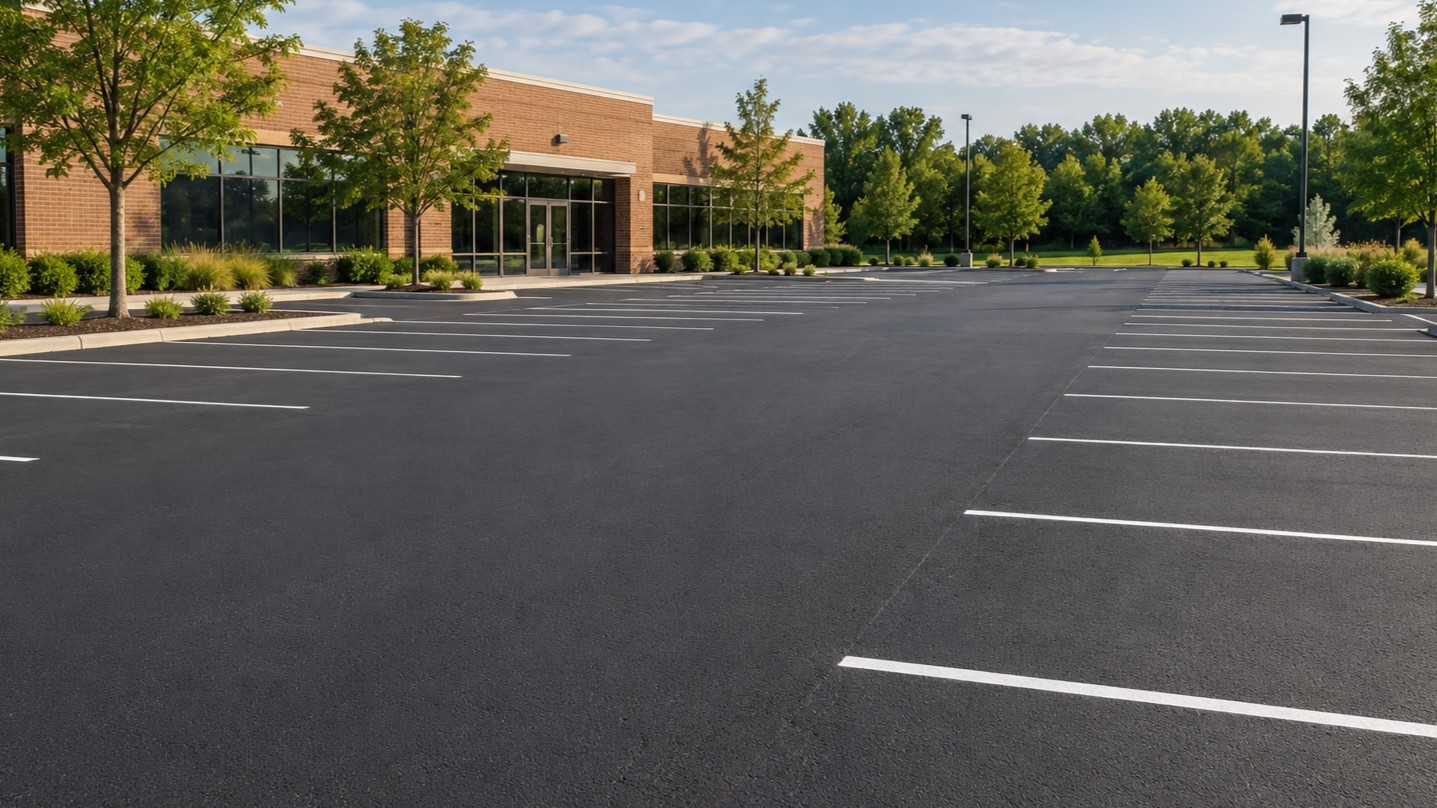
Restriping usually follows the existing layout. The old markings are cleaned and prepared, then repainted so they are visible again. That makes it different from laying out a new parking lot from scratch, where spaces, traffic patterns, access aisles, and other markings first need to be measured and positioned.
360° Painting of Saint Joseph, which provides commercial parking lot striping in Saint Joseph, Missouri, recommends looking beyond whether the paint simply appears faded. The existing layout should still make sense for the way vehicles and pedestrians use the property today.
Faded Lines Cause More Trouble Than They Look Like
A few pale parking lines may not seem like an urgent maintenance issue until drivers start inventing their own spaces.
One vehicle parks slightly too far left. The next one follows. Before long, a row that was designed for ten vehicles comfortably fits nine, traffic aisles feel tighter, and nobody is completely sure where one space ends and the next begins.
Clear striping brings order back to the lot. Directional arrows help guide traffic through entrances, exits, and drive aisles. Crosswalks identify places where drivers should expect pedestrians. Clearly marked no-parking or loading areas reduce the chance that vehicles stop where they interfere with traffic.
There is also the property’s appearance to consider. Customers may not consciously admire freshly painted parking lines, but faded markings, patched asphalt, and poorly defined spaces can make the exterior feel neglected before someone has even reached the front door.
Restriping is a relatively small visual change that can make the entire parking area look more deliberate and maintained.
The Benefits Go Well Beyond Curb Appeal
Fresh stripes certainly make a parking lot look better, but appearance is only part of the value.
The first benefit is organization. Clearly defined stalls help drivers use the available space more efficiently. When markings become difficult to see, people tend to leave wider or inconsistent gaps between vehicles, which can reduce the practical capacity of the lot.
Traffic flow improves as arrows, stop markings, drive lanes, and painted boundaries give drivers visual instructions before they have time to hesitate or improvise.
Then there is pedestrian movement. Crosswalks and other painted areas help separate walking routes from vehicle traffic and make people easier for drivers to anticipate.
Accessibility is particularly important. Federal ADA guidance states that when businesses or state and local governments restripe parking facilities, required accessible parking spaces must comply with the applicable ADA standards. Requirements cover the number of accessible spaces, access aisles, location, dimensions, and van-accessible parking.
That makes a restriping project a good time to check whether the existing accessible layout still meets current requirements rather than automatically copying markings that may be outdated.
How Do You Know It’s Time To Restripe?
The parking lot usually makes this fairly obvious. If drivers have to look closely to work out where the spaces are, the markings have already faded too far.
Some areas tend to wear faster than others. Entry points, turning lanes, drive aisles, and spaces that see constant vehicle traffic may fade before quieter sections of the lot.
Weather plays a part too. Sun exposure, rain, snow, ice, road salt, snow removal, and repeated tire traffic all work against painted pavement markings over time.
Instead of relying entirely on a fixed calendar, property owners can inspect the lot periodically and look for practical signs of wear.
- Are individual stalls still clearly defined?
- Can drivers easily see arrows and stop markings?
- Are accessible spaces and access aisles obvious?
- Are crosswalks still easy to identify?
- Are customers starting to park inconsistently?
If the answer to several of those questions is no, the lot is probably ready for attention.
Fresh Sealcoat Means Fresh Stripes
There is one situation where the timing is less ambiguous. If the parking lot has just been sealcoated, the markings generally need to be repainted.
Sealcoating covers the existing lines along with the asphalt, leaving the surface darker and more uniform but taking the parking layout with it.
The same can happen after resurfacing or substantial pavement repairs. Restriping should therefore be planned as part of the wider pavement-maintenance job, not treated as an afterthought once the blacktop is finished.
That also creates an opportunity to check whether the old layout is still the one worth putting back.
Sometimes Repainting The Old Layout Is The Wrong Move
Businesses change. A parking lot designed years ago may have been laid out for a different tenant, a different traffic volume, or a different mix of customers and employees.
Maybe delivery vehicles now use the property more frequently. Perhaps curbside pickup has been added. There may be more pedestrian traffic, or a business may need clearly defined loading, customer, or employee areas.
In those situations, blindly repainting the old lines preserves the old problems. 360° Painting recommends considering traffic flow, designated spaces, directional arrows, pedestrian markings, and applicable regulations when planning a striping project.
A layout change may require more planning than ordinary restriping, but it can be worthwhile if the current configuration wastes space or creates confusion.
Check The Lot Before The Crew Arrives
Restriping goes more smoothly when the surface is ready for paint, and the lot can be cleared.
Cars, delivery vehicles, dumpsters, temporary storage, and other obstructions may need to be moved from the work area.
The pavement should also be reasonably clean. Dirt, loose debris, oil, and deteriorating material can interfere with paint adhesion.
Major cracks, potholes, or failing asphalt deserve attention too. Fresh paint will make the markings clearer, but it will not fix pavement underneath them.
Scheduling matters for commercial properties. The contractor may need sections of the lot closed temporarily while preparation and painting take place, followed by enough drying time before traffic returns. Businesses may therefore prefer quieter periods, weekends, or other times when disruption can be reduced.
Planning those details ahead of time is often easier than trying to move customers and cars after the striping crew arrives.
Don’t Wait Until The Lines Disappear
Parking lot restriping is one of those maintenance jobs that is easy to postpone because the decline happens gradually. The better time to restripe is while the existing layout can still be followed and before faded markings begin affecting how the lot functions.
For Saint Joseph property owners, 360° Painting of Saint Joseph recommends treating striping as part of regular exterior maintenance and reviewing both the visibility of existing markings and whether the current layout still serves the property well.
Fresh lines can make a worn parking lot look noticeably sharper, but the bigger payoff can be substantial. Now, people know where to park, the accessible spaces remain identifiable, and the parking lot gets back to doing what all those painted lines were meant to help it do in the first place.
360 Painting of Saint Joseph
+1 816 441 4525
Saint Joseph
Saint Joseph
Missouri
64502
United States


